Prime stock gets beer and massage

Kobe beef was once an exotic Japanese luxury. But now UK manufacturers are jumping on the band-wagon, and Kobe beef - and even pork - are firmly on the menu. Catherine Quinn reports


 - Published:  02 October, 2006
Page 33 

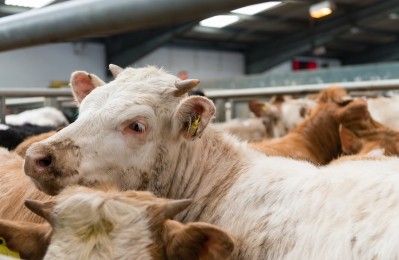
There was once a time when only wealthy Japanese got to try Kobe beef. Reared to age-old methods of beer feed and massage, Kobe cattle took on an almost mystic status. And visiting Japan in person was about the only way to sample this white marbled, soft textured delicacy. But with a climate similar to Tokyo, and a growing gourmet population, the UK has begun its own Kobe production techniques. And now both UK cows and pigs are getting the beer and massage treatment.

In Worcester, Lucie's Farm has just begun producing various cuts of Kobe. Initially show-breeders, husband and wife team Craig and Margery Walsh found the bovine spongiform encephalopathy (BSE) crisis pushed them to capitalise on their ability to produce high-quality meat on a small scale.

Hawaii-born Craig Walsh was familiar with Kobe beef, and decided to give it a try. "We tried feeding one of our cows with beer and grain, and massaging," he says. "When I went to the abattoir, the guy there who is quite a gruff character was unusually almost gushing. He asked us to pick out our carcass from about 25 hanging, and it did in fact look completely different to the others."

Kobe is a luxury product which has slowly gained recognition outside its home country of Japan. In the Land of the Rising Sun, breeding meat for high fat marbling has been taking place for centuries, while European cattle have traditionally been bred to other criteria.

Like many gourmet innovations, the Kobe rearing method historically came about through practicality. Europeans, with extensive pasture-land used grass-feed as a cost-effective method of keeping cattle. In contrast, meat was excluded from the Japanese diet for religious reasons until 1868. So by the time meat eating was deemed acceptable, the geography of the country had not been established for cattle farming.

Short of space and grass, farmers barn-reared animals instead, and fed them grain. The difference in feed alone is enough to produce substantially different meat, but other techniques were adopted to counter the debilitative effects of keeping cattle static in a barn environment.


Beer and massage


In the Kobe region of Japan, cows were massaged to help assuage the problem of sedentary living. Also, the low appetite of a herd of cattle expending minimal energy was treated with a supplement of beer to their diet. As an appetite stimulant, small amounts of alcohol were useful in encouraging the herd to feed.

However, that the method of rearing Kobe beef is still something of an enigma. Japanese farmers are notoriously reticent about sharing their techniques overseas, and some theorists believe the beer and massage techniques are carried out simply to relax the animal.

Whatever the technique, the results are undeniable. Although there are arguments for the health benefits of grass-fed cattle, grain-feeding results in fat that melts at a lower temperature. In comparison the higher melting point of grass-fed cattle fat means tougher meat. Kobe beef also boasts a higher percentage of healthy polyunsaturated fat.

The rearing methods also lead to the densely marbled fat which gives Kobe its distinctive appearance. Often described as meat which 'has been left out in the snow' the beef has the appearance of thin strands of muscle suspended in fat, rather than the usual edge of fat found on European steaks.

Although the UK doesn't categorise beef according to fat density, grading carcasses on the fat content of the rib-eye meat is common practice both in Japan and the US. The American top grading of 'prime', which is only available in gourmet restaurants, would only hit a five or six on the Japanese scale, Kobe being a 12. The fat content of Kobe can reach 9.1, or 90% density.

The succulent meat and intensive production methods also mean a high price tag. Carcasses produced to this method sell for between £5-6,500 in Japan with some fetching as much as £10,000.

True Kobe beef can only come from the corresponding region, although it isn't technically a protected title. Wagyu beef is seen as the next step down in the gourmet sense, and refers to the cattle type (Gyu meaning 'cow' in Japanese, and 'Wa' being the breed) used in Kobe production, which has not necessarily met the rigorous standards of the region. Farmers are fiercely protective of the Wagyu strain, which has been bred in Japan for centuries, purely for the quality of its marbling.

Foreign farmers keen to get their hands on the breed to sell back to the Japanese market have met with resistance. But there is another way around the problem. UK based Kobe producer Craig Walsh rears Aberdeen Angus cattle using Japanese techniques - a method he sees as actually superior to usual Kobe rearing.

"I think when you're rearing cattle for meat, the most important thing is the breed," says Walsh. "The Japanese came to meat breeding later than Europeans, and their cattle come from plough animals. In contrast, cattle like Aberdeen Angus - which I believe to produce the best beef in the world - have been bred for centuries for muscle density. It's somewhat ironic, but the Japanese methods of rearing actually came about from bad husbandry: keeping animals in barns and grain feeding them. But teaming these methods with European breeding I believe produces the best possible meat."

For Walsh, the second most important meat-rearing technique is feed. "We tried to get a type of grain which was most like that which the Japanese use; although we do have some grass feed as well, just because it's important for the animal's health," he says. "Then I think the beer and the massage are just the nice extras really."

Walsh's Kobe-reared carcasses command a premium over other beef, which in a trade lain low by BSE is quite an achievement. Encouraged by his success selling Kobe, he has now branched out into another gourmet Japanese meat - Kurubuta pork.


Kurubuta pork - the next big thing


"I think everyone's always after the next big thing," explains Walsh. "A while ago that was Kobe, and now I think Kurubuta pork is the next thing that people will want."

In comparison to the logistical nightmare of sourcing Wagyu, Craig found the process almost comically simply.

"I thought we were going to have to import embryos from Japan," he explains. Instead, he discovered the breed of pigs so highly regarded in Asia was in fact a native English pig.

"When we investigated we found that the pigs are actually Berkshire pigs - so they were just up the road." Although Walsh uses the Kobe techniques of beer and massage on the pigs, this is not part of the process in Japan, where it's only the breed which is highly prized.

As with his cattle, Walsh intends to team the best breed with what he sees as the best techniques for gourmet quality meat.

So is there likely to be a big market for Kobe? Walsh doesn't think so, seeing his business as something of a niche supplying to dedicated gourmands.

"I think practically it's difficult," he says. "We've had Waitrose down here, but I'm not sure how they could sell the meat. Logically it freezes very well because of the high fat content, but I think it would be difficult to sell frozen meat as a gourmet product. And if they sell it fresh how do they deal with wastage? It's incredibly expensive to throw out the cuts you don't sell."

Other suppliers are more optimistic, however. Leon Aarts, who runs gourmet website Discerning Food, has found that his supplies of Wagyu have been in high demand since he began selling them last year. "It's really taken off," he claims. "At the moment it's mostly restaurants we're supplying, but the consumer market has grown quite considerably."

Aarts also believes that the Wagyu meat he sells has far more versatility than is currently realised. "People think of the prime cuts, but actually the meat is such good quality that other cuts like brisket, which are often quite tough, are very succulent from Wagyu carcasses." He sees a potential market for these lesser cuts in gourmet products such as pies. "We're developing gourmet pies in ramekins, which don't cost too much because we don't use steak cuts."

With the UK demand for gourmet food apparently increasing inexorably, it seems only a matter of time before this meat becomes a serious consideration for larger suppliers. FM


Bookmark with:What are these?
Find Suppliers, Manufacturers and Ingredients
Search over 800 ingredient categories
& 1000 ingredient suppliers!
 
 
ingredients   companies   both   
   
Get FREE News E-Alerts

Have Your Say

Is the Co-operative Group's acquisition of Somerfield good news for suppliers?

  • Yes
  • No
Events Calendar

© William Reed Business Media Ltd 2008. All rights reserved. Registered Office: Broadfield Park, Crawley, RH11 9RT.
Tel: +44 (0) 1293 613400 Registered in England No. 2883992 VAT No. 644 3073 52.

Privacy Policy | Terms & Conditions


The Information Resource for Food and Drink Processing